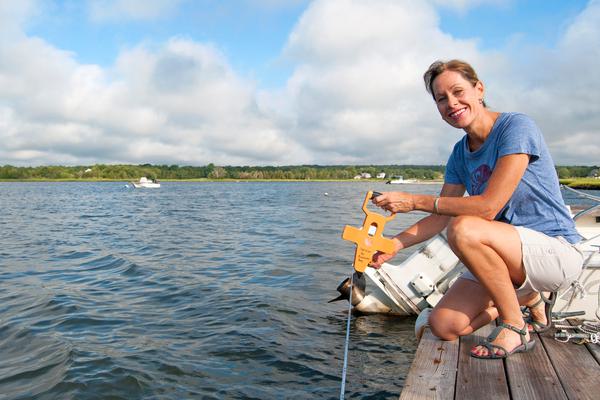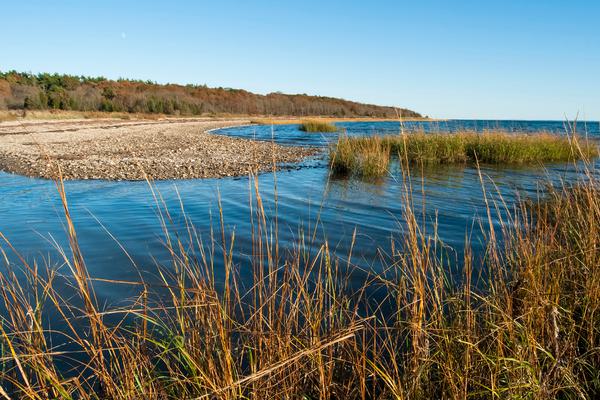
Since 1992, the Coalition’s water quality monitoring program has provided data to study the health of Buzzards Bay and its harbors, coves, and rivers. This Bay Health data forms the foundation of all the Coalition’s work to restore and protect the Bay and is the largest, longest-running coastal monitoring effort in New England.
Each week during the summer, we monitor more than 300 stations in 30 major harbors, coves, and rivers across Buzzards Bay — an area covering more than one-quarter of the Massachusetts coast to measure dissolved oxygen, temperature, salinity, and water clarity. Bay Health data helps the Coalition and local decision makers identify pollution problems all across the region. Baywatchers data has even been used for long-term research projects like understanding the local impacts of climate change. In 2012, the Coalition received EPA's Annual Environmental Merit Award for its 20+ years of dedicated service for its water quality monitoring program.

Testing for other nutrients
Four times a year, the Coalition staff and some dedicated volunteers fan out across the watershed for Nutrient Days. They record data that water quality monitors regularly collect weekly at their sites throughout the summer. They also collect nutrient samples from each site. Upon delivery to Woodwell Climate Research Center’s lab in Falmouth, they are tested for dissolved forms of nitrogen, phosphorus, and organic carbon; particulate forms of carbon and nitrogen; and phytoplankton pigments (phaeophytin and chlorophyll). Ultimately, nutrient levels will be analyzed and results will be used to understand how the area’s waterways are affected by wastewater pollution, primarily from septic systems, and other causes of nutrient runoff that impact water quality.
River Monitoring
Rivers are monitored at 13 locations across the watershed throughout the year. These freshwater sites were chosen because their data elicits how the variety of inputs (i.e. streams, brooks, and rivers) transport pollutants, namely nitrogen, through the watershed and into our monitored embayments. Woodwell Climate Research Center started river monitoring in Southeast Massachusetts and the Cape and still analyzes the water that is collected. Buzzards Bay Coalition board member and Woodwell senior scientist Christopher Neill devised this particular monitoring program with the Coalition and Casey Kennedy at the UMass Cranberry Station in Wareham. In 2025, the Buzzards Bay Coalition became the lead organization for the river monitoring program and Research Assistant Lilia Bartolotta took over the sample collection.